A single portal where the team quotes, vets suppliers and costs imports, instead of emails and spreadsheets.
Foreign trade
An importer that went from running on emails and spreadsheets to running as a platform.
AI platformImportingConfidential
Purchasing advisor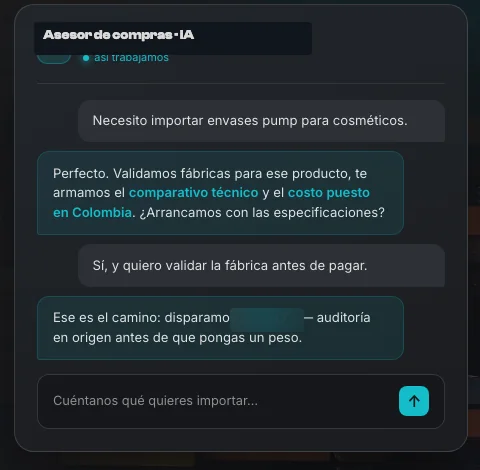
Four things, on the same ERP.
Five artificial intelligence tools: product sheet, supplier comparison, landed cost, contracts and sales coach.
A new website that tells the full cycle of an import, with an AI purchasing advisor that talks with the client.
Everything works with the data the company already had, read-only and without changing anything.
The client's name is kept private.
We design it, build it and connect it.
- DesignsThe platform and the website, so the company presents itself as a foreign trade platform.
- BuildsThe five artificial intelligence tools and the website's purchasing advisor.
- ConnectsThe ERP, read-only: the tools use the data that was already there.
- DeliversEvery week, with the team, on their real work.
Every import was scattered across emails, spreadsheets and someone's memory.
The information was in many places.
Products, suppliers and costs lived in the ERP, in emails and in different spreadsheets.
Quoting was manual work, every time.
Comparing factories, calculating the real cost of bringing in a product and building its sheet was done by hand for every client.
From the outside it looked like a services firm.
The website did not show that the company already handled the full cycle of an import.
Five tools and a website, on the same ERP.
All of them work with the data the company already had, without changing anything. Tap any of them to see what it does and what it solves.
In pink, the piece you are looking at and how it connects.
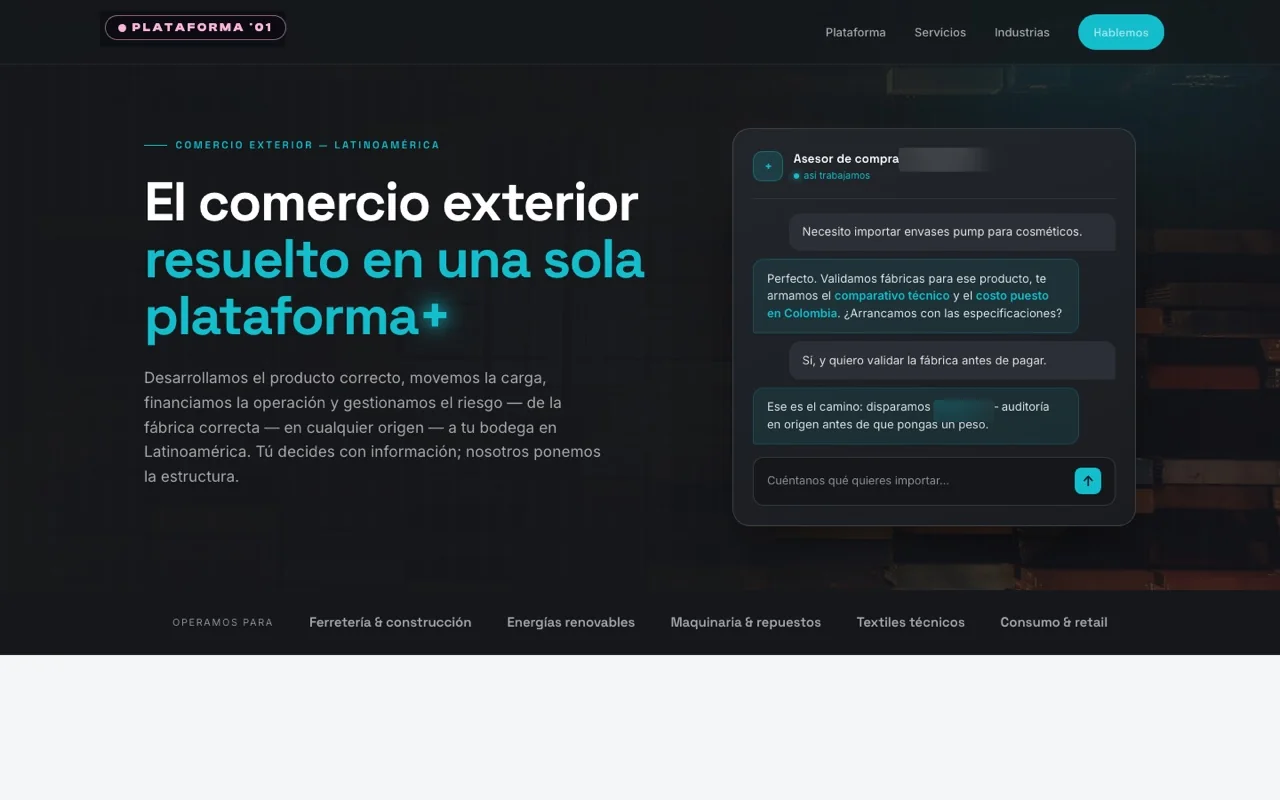
01 · Website and purchasing advisor
The company presents itself as a platform.
A new website that tells the full cycle of an import, with an artificial intelligence advisor that talks with the client: what they want to import, what should be vetted and what it costs landed.
What it solvesThe client understands their import before talking to a person.
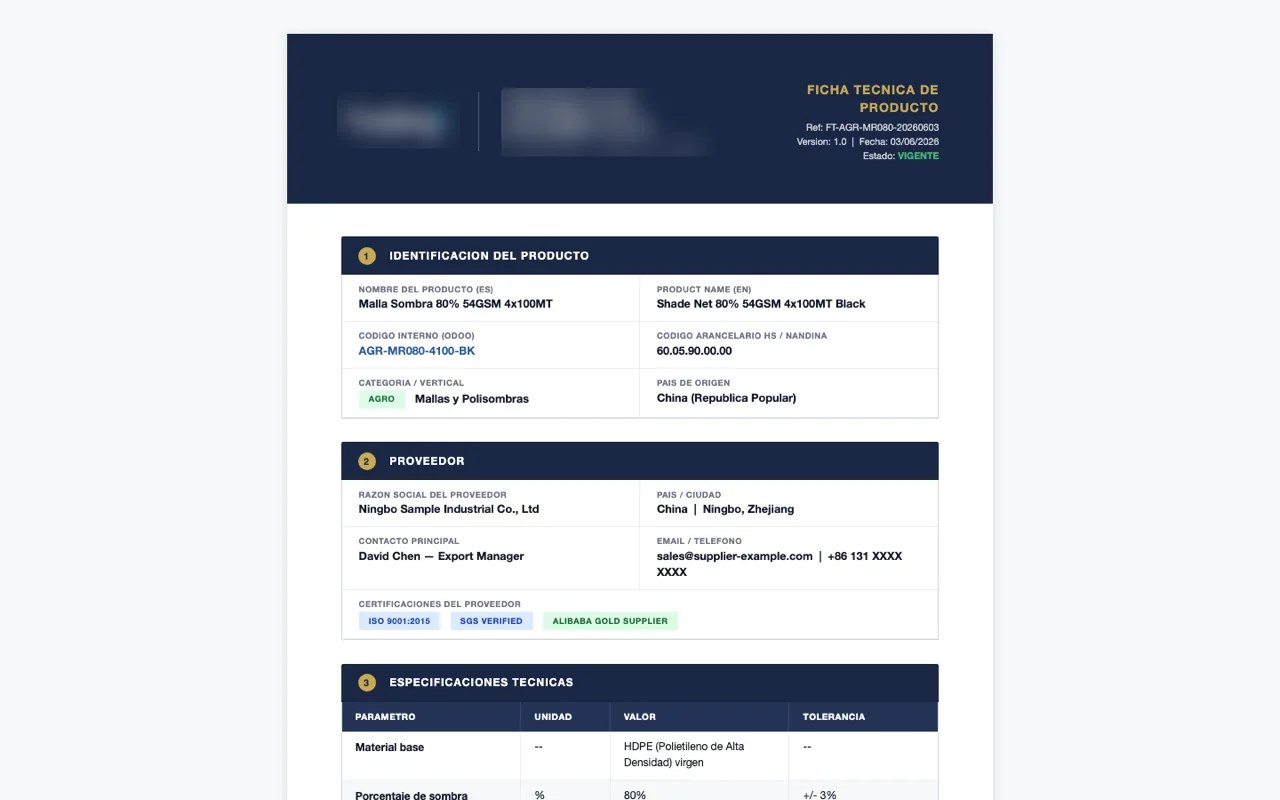
02 · Automatic product sheet
Every product's sheet, built by itself.
It takes the product and supplier data already in the ERP and builds the sheet with specifications, certifications and contact, ready to send or publish.
What it solvesEvery product comes out documented the same way, without redoing the sheet by hand.
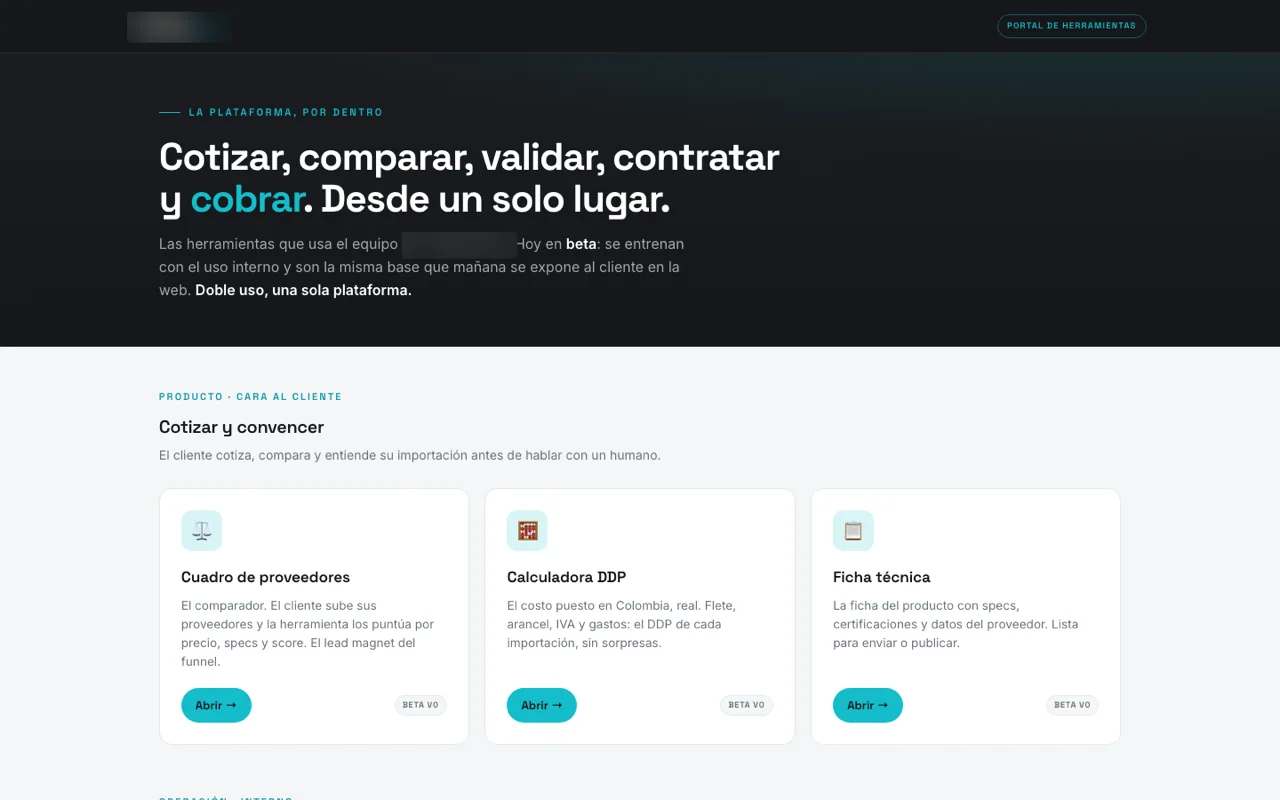
03 · Supplier comparison
Factories, compared on the same criteria.
The team uploads quotes from several suppliers and the tool compares them on price, specifications and reliability, with a score for each.
What it solvesSuppliers are chosen with information, not by gut feeling.
04 · Landed cost
The real cost of bringing in a product, before buying it.
It adds freight, duties, taxes and fees to show what the product costs delivered to the client's warehouse.
What it solvesNobody buys without knowing what it will really cost.
05 · Contract generator
Purchase contracts built from the real data.
With the product, supplier and negotiation information, the tool drafts the purchase contract. The team reviews it and signs it.
What it solvesLess risk in every purchase and less time drafting.
06 · Sales coach
Someone who looks at open deals every day.
It reads the sales opportunities in the ERP and suggests the next step for each one.
What it solvesThe team knows what to move first.
Artificial intelligence, on the ERP they already had.
The platform reads the company's ERP read-only: it changes nothing the team already uses. In pink, where artificial intelligence works. Tap any of them.
The platformon its ERP
ToolArtificial intelligence
The website, the advisor and the tools inside.
Swipe
From emails and spreadsheets to one platform.
AI tools in real use, on the company's ERP.
Place to quote, vet suppliers and cost imports, instead of emails and spreadsheets.
From kickoff to pilot in use: weeks, not years.
Keep looking.


Your company
What would your operation do with a platform like this?
Tell me how your team works today and I'll tell you what I'd connect first.